Rhinoplasty for nasal reconstruction
Rhinoplasty is the most difficult of facial plastic and reconstructive surgical procedures. That's because, unlike other types of plastic surgery, it involves more than just moving and stretching skin and underlying soft tissues. The goal of rhinoplasty is to change the structure and function of the nose by manipulating the nasal skeleton. This can lead to significant improvement in function and appearance if done correctly. On the other hand, if care is not taken to preserve the delicate nasal skeleton during surgery, severe deformity and loss of function can result.
Below are pictures of people that have undergone rhinoplasty for various reasons. Many had nasal deformity due to previous surgery or trauma.

 This woman had a significant deformity of the nose as can be seen from her left sided pre-operative pictures. You will notice the wide, misshapen tip of the nose on the bottom and frontal views and the "saddle" deformity caused by a severe depression on the profile view. She mistakenly thought she had a "large hump" and was thinking about removing it. No bone or cartilage removal was done as this would have made thins much worse. Instead, her condition was corrected with multiple cartilage grafts and nasal skeletal repositioning and reshaping maneuvers.


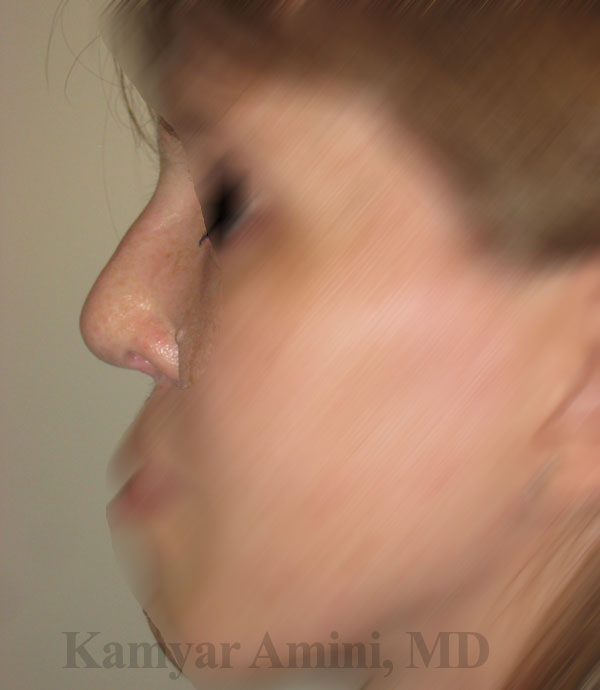


Rhinoplasty to reshape the nose is simpler when done correctly the first time. People have different requests in terms of how different they want to look. This woman was specific in wanting a whole new nose and did not mind major change. She requested a "hump removal" but had a more thorough open rhinoplasty to elevate the nasal tip and reduce the overall length. Hump reduction was also performed but in a very minimalistic way. Breathing improved dramatically after surgery.


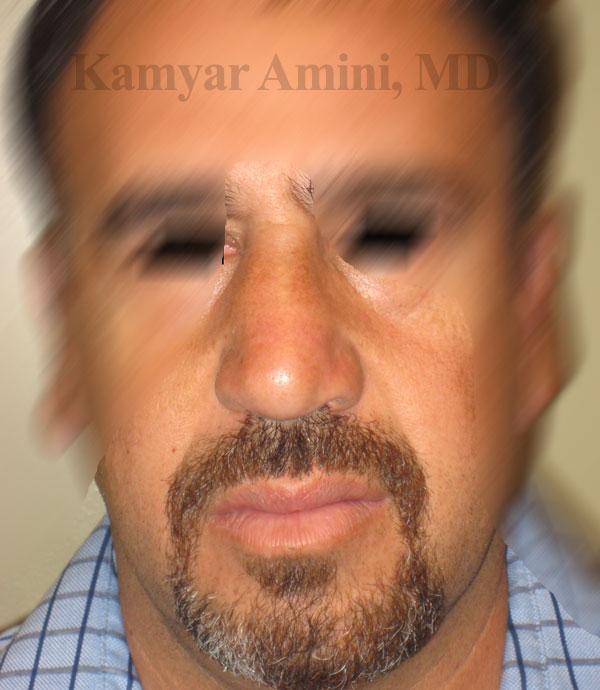 This gentleman had severe nasal congestion due to major nasal trauma. His nose was twisted both internally and externally. The frontal view is the best to help appreciate the correction of the twisted nasal spine. Breathing improved significantly. The profile view demonstrates the added benefit of streightening the bridge. Again, no "hump removal" was performed. This was all done by reshaping the native nasal skeleton.


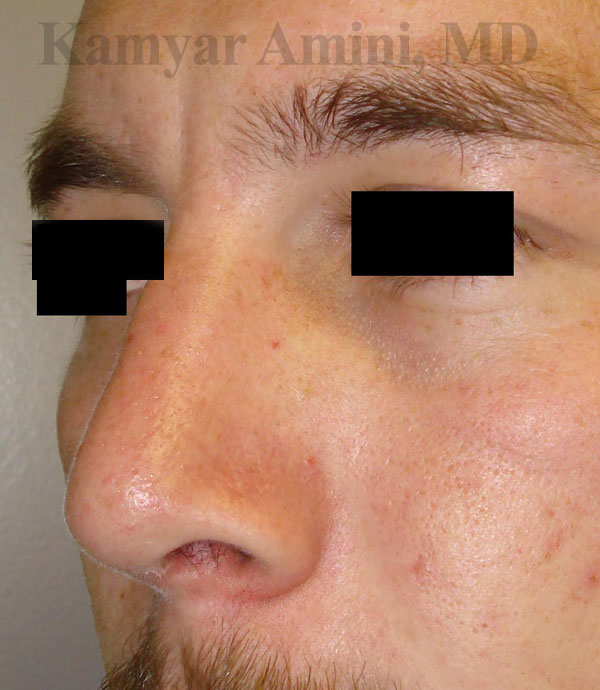
This is another gentleman that was requesting his "large hump" be removed. He had actually been given a quote for "rasping it down" but wanted a second opinion. The significant difference between the before and after pictures is due to adding cartilage and support to his dropping nasal tip, not from rasping and removen a hump. The best way to appreciate this is to compare the angle between the nose and the upper lip before and after surgery.


Rhinoplasty including nasal and septal reconstruction for nasal congestion. This gentleman wanted a more minimal procedure to avoid the "operated" look.
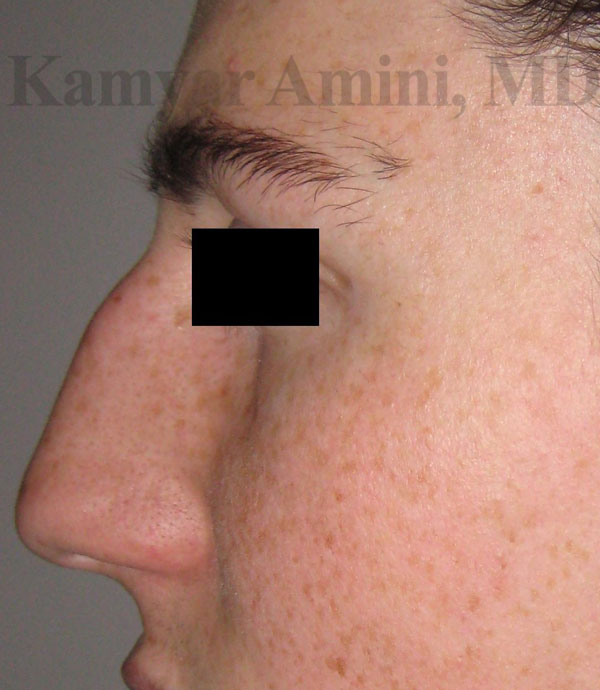


Woman with the difficult request of wanting a "hump removal" and smaller nose but avoiding removal of bone and cartilage and avoiding obvious signs that the nose was changed surgically.

 Woman with concern for dropping nasal tip and "longer appearing" nose after nasal trauma. Note that by raising the tip of the nose up, the perception of a "hump" is reduced and the nose appears much shorter.


Woman requesting a shorter, smaller nose. Note that no bone was removed to comply with her request of "minimal" surgery.
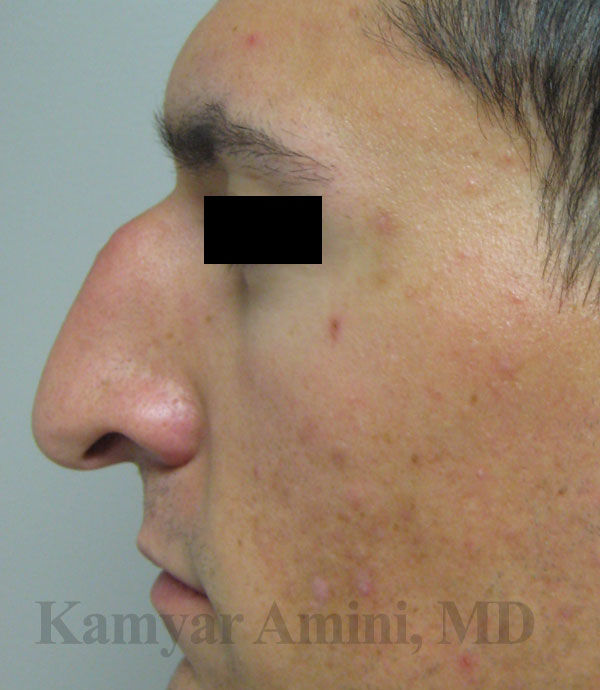

Very large and extended nose. Significant tension internally was acutally limiting nasal airflow. This gentleman needed significant osteotomies and removal of bone. His breathing improved significantly regardless.


 This unfortunate woman suffered progressive nasal collapse and deformity from trauma. She wa scheduled for several stages of surgery. The pictures you see on the right are after her first stage. This required grafting from the ears and rib, adding bone and cartilage to recreate the nasal skeleton. Although several revisions were planned, she was so happy with her first stage results that she was not interested in any revision surgery at the time of this photography.


This woman was unhappy with the shape of her nose overall. We made several recommendations which she accepted in order to add definition to the tip and straighten the nasal hump.
|
Dr. K. Amini 8435 Reseda Blvd Northridge, CA 91324 |


@ ENT Doctor LA, Website was created and maintained by Biago Media